

Real Estate-Related 2025 End-of-Year Chaptered Bill Summaries
Published: May 6, 2026
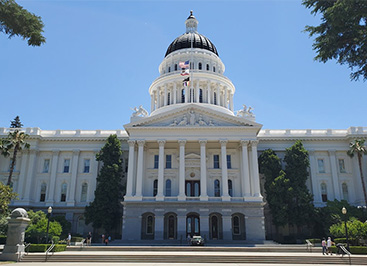 Take a look at real estate-related legislation that passed and is now enacted into law.
Chapter 128, Statutes of 2025 (AB 238, Harabedian) enacts the Mortgage Forbearance Act, which requires a mortgage servicer to provide up to 12 months of forbearance to a borrower experiencing financial hardship due to the recent Los Angeles Area wildfires. This bill went into effect on September 22, 2025.
Chapter 337, Statutes of 2025 (AB 246, Bryan) enacts the Social Security Tenant Protection Act of 2025 to provide residential tenants an affirmative defense in an unlawful detainer proceeding for the nonpayment of rent if they experience a loss of income during a Social Security payment interruption that resulted from the action or inaction of the federal government. This bill will sunset on January 20, 2029.
Chapter 531, Statutes of 2025 (AB 299, Gabriel) in response to the recent wildfires in the Los Angeles Area, provides that a guest residing in a lodging, who resides for more than 30 days as a result of their prior house being substantially damaged by a declared disaster, will not have their continued occupancy be considered a new tenancy until the guest has remained for 270 days. A lodging is required to provide a notice, as well as a confirmation form, to guests regarding this tenancy exemption for stays that exceed 30 days. These documents must be provided no later than check-in if the lodging believes the guest meets these criteria. This bill applies to lodgings including a hotel, motel, or short-term lodging. The measure went into effect on October 10, 2025, and will expire on January 1, 2031.
Chapter 340, Statutes of 2025 (AB 414, Pellerin) requires a landlord or their successor, who receives a security deposit or rental payments from a residential tenant by electronic transfer, to return the security deposit by electronic transfer, unless the landlord or landlord’s successor and tenant agree in writing to another method of returning the security deposit. Landlords or their successors have to notice tenants of their right to receive the security deposit electronically within a reasonable period of time after the notification of either party’s intention to terminate the tenancy. This bill provides that, upon mutual agreement between the landlord and tenant, the landlord may send to the tenant by email the required itemized statement which specifies repairs or cleanings that will be deducted from a security deposit. This bill additionally provides the method by which a security deposit and the itemized statement shall be returned to multiple departing adult tenants.
Chapter 263, Statutes of 2025 (AB 455, Ortega) requires the seller of single-family residential real property who has knowledge of any residue from, or any history of, smoking tobacco or nicotine products on the property to disclose that knowledge to the buyer. This bill also requires the Department of Toxic Substances Control, in collaboration with the Center for Tobacco and the Environment at San Diego State University, to update the Homeowners’ Guide to Environmental Hazards with information regarding thirdhand smoke.
Chapter 342, Statutes of 2025 (AB 628, McKinnor) for rental agreements entered into, amended, or extended on or after January 1, 2026, requires the following to be included in a residential dwelling unit for the unit to be considered tenantable: 1) a stove that is maintained in good working order and capable of safely generating heat for cooking purposes and 2) a refrigerator that is maintained in good working order and capable of safely storing food. A stove that is subject to a recall by the manufacturer or a public entity will not be considered capable of safely generating heat for cooking purposes. Likewise, a refrigerator that is subject to a recall by the manufacturer or a public entity will not be considered capable of safely storing food. A landlord is required to repair or replace a stove or refrigerator that is subject to recall within 30 days of receiving notice of the recall.
The requirement to provide a stove and refrigerator does not apply to permanent supportive housing units, single-room occupancy units, residential hotels, and dwelling units within a facility that offers shared kitchen spaces for residents. Tenants are allowed to furnish their own refrigerator if mutually agreed to by the tenant and landlord and the following conditions are met: 1) the lease contains a clause noting the requirement for a landlord to provide a refrigerator, 2) by checking a box in the lease, the tenant acknowledges that they have asked to bring their own refrigerator and are responsible for keeping it in working order, 3) the lease provides that the tenant may, with 30 days’ written notice, inform the landlord that they no longer wish to keep their own refrigerator in the unit, and that at the end of the 30-day notice period, the landlord will install a refrigerator in good working order in the unit, and 4) a landlord does not condition a tenancy upon the tenant providing their own refrigerator.
Chapter 497, Statutes of 2025 (AB 723, Pellerin) requires a real estate licensee, or person acting on their behalf, who includes a digitally altered image, as defined, in an advertisement or promotional material for the sale of real property to also include a statement in the advertisement or promotional material that discloses that the image was digitally altered. They must also provide a link to a publicly accessible website, URL, or QR code that includes and clearly identifies the original, unaltered image. The disclosure statement must be reasonably conspicuous and located on or adjacent to the image and must include language indicating that the unaltered images can be accessed on the linked internet website, URL, or QR code.
If the advertisement or promotional material is posted on an internet website over which a licensee or a person acting on their behalf has control, they are required to additionally include in the posting the unaltered version of the image from which the digitally altered image was created. The licensee or person acting on their behalf may comply with this requirement by including 1) a link to a publicly accessible internet website that includes, and clearly identifies, the original, unaltered image and 2) a statement indicating that the unaltered images can be accessed on the linked internet website, URL, or QR code.
Chapter 535, Statutes of 2025 (AB 851, McKinnor) until January 1, 2027, prohibits unsolicited offers to purchase residential real property in specific Los Angeles Area zip codes affected by the Los Angeles Area fires. The bill requires a seller and buyer to execute a written attestation affirming that the sale was not a result of a prohibited unsolicited offer and requires the buyer to record the signed attestation as an attachment to the deed when recording the transfer of title. A violation of this law is a violation of a real estate licensee’s licensing law if they made a written offer and were either acting 1) for themselves or 2) on behalf of another while conducting licensed activity. The bill also authorizes the Attorney General, county counsel, city attorney, and district attorney to bring civil actions to enforce the law, as well as outlines monetary penalties and misdemeanor penalties. It allows a seller to cancel a real property sales contract for four months after the execution of the contract if it was entered into in violation of this bill. The measure went into effect on November 13, 2025, and will be repealed on January 1, 2027.
Chapter 344, Statutes of 2025 (AB 863, Kalra) requires the Judicial Council to create a single summons form for unlawful detainer actions that includes specified information in English, Spanish, Chinese, Tagalog, Vietnamese, and Korean by January 1, 2027. This form is for mandatory use, and the Judicial Council is required to publish it on their website.
Chapter 506, Statutes of 2025 (AB 1414, Ransom) for a residential tenancy commenced, renewed, or continuing on a month-to-month or other periodic basis on or after January 1, 2026, requires a landlord or their agent to allow a tenant to opt out of paying for a subscription from a third-party internet service provider for wired internet, cellular, or satellite service offered as part of residing in the dwelling unit. The bill allows a tenant to deduct the cost of the internet subscription from their rent if a landlord or their agent violates this requirement. The bill prohibits a landlord from retaliating against a tenant who opts out of using the internet service provider and specifies that the bill does not prevent landlords or their agents from offering tenants bulk-billing arrangements for services.
Chapter 200, Statutes of 2025 (AB 1521, Judiciary Committee) corrects a drafting error contained in AB 2992 (Nguyen, S., Chapter 516, Statutes of 2024) pertaining to buyer-broker representation agreements used in real estate transactions. Among the provisions of the bill, AB 2992 amended Business and Professions Code 10147.5 to require that a buyer-broker representation agreement include a disclosure to buyers of real property that real estate compensation is not fixed by law. This measure corrects the language of the statutorily outlined disclosure to state that real estate compensation is negotiable between a buyer and a broker.
Chapter 516, Statutes of 2025 (SB 410, Grayson) expands the list of documents that a homeowner of a separate interest in a common interest development is required to provide to prospective purchasers. It adds a copy of the most recent inspection report of the exterior elevated elements, such as balconies, walkways, and staircases. Such a change will also compel the homeowners’ association to provide the report to a homeowner, upon request. Further, the bill adds inspectors’ reports compiled pursuant to required exterior elevated element inspections to the definition of association records and requires such inspectors’ reports to be subject to inspection for two inspection cycles. Lastly, the bill requires inspectors who complete inspections of exterior elevated elements to include on the first page of the report six data elements and certify that they have conducted a visual inspection and evaluated a statistically significant sample of the exterior elevated elements in a project.
Chapter 547, Statutes of 2025 (SB 610, Pérez), among other provisions, declares that, for any structure intended for human habitation, a landlord has a duty to remediate any dilapidations that arise from a disaster by 1) removing debris caused by the disaster and/or 2) mitigating hazards arising from the disaster including, but not limited to, mold, smoke, smoke residue, smoke odor, ash, asbestos, or water damage. This bill also provides that when a tenancy is terminated due to the destruction of the property, the landlord must return any advance rental payments to the tenant within 21 days.
Chapter 548, Statutes of 2025 (SB 625, Wahab) makes void and unenforceable any covenant, restriction, or condition (CC&R) contained in any deed, contract, security instrument, or other instrument that prohibits, or has the effect of prohibiting, the reconstruction of a residential structure that was destroyed or damaged in a disaster if it will be substantially similar to the structure prior to the disaster. The bill also makes void and unenforceable any provision of a homeowner’s association (HOA) governing document that also prohibited such reconstruction. Lastly, this bill establishes the parameters under which an HOA must process applications to rebuild destroyed or damaged properties.
Chapter 525, Statutes of 2025 (SB 770, Allen) deletes the requirement that a homeowner’s insurance policy name the homeowners’ association as an additional insured party when a homeowner installs an electric vehicle charging station in a common area of a common interest development.
Chapter 786, Statutes of 2025 (SB 774, Ashby) extends the sunset date of the Department of Real Estate and Bureau of Real Estate Appraisers from January 1, 2026, to January 1, 2030, and makes technical, non-substantive changes to the Real Estate Law. In addition, it creates a cross reference in Real Estate Law to statute regarding the portability of licensure for military and their spouses from other states, updates the Department’s authority to receive federal fingerprint-based background checks for applicants and licensees, and requires applicants to submit email addresses to the Department. In addition, the bill exempts licensee and applicant email addresses from disclosure under the Public Records Act, requires additional reporting on military applicants, strikes obsolete law regarding conditional licenses, and allows the Department to make payments from the Consumer Recovery Account based on the evidentiary standard of preponderance of the evidence without having to automatically suspend the licensees’ license.

